Hong Kong: Media tycoon Jimmy Lai convicted of fraud – IFJ statement

In the latest targeted prosecution of Jimmy Lai by Hong Kong authorities, the media tycoon and founder of Apply Daily was convicted of fraud on October 25 after a court found he violated the terms of a lease. The International Federation of Journalists (IFJ) condemns the court’s verdict and the ongoing persecution of Lai and calls for his immediate release from prison.

Jimmy Lai (C), who was convicted of fraud on October 25, looks on as activists demonstrate outside court on November 3, 2020. Credit: Peter Parks / AFP

 District Court Judge Stanley Chan Kwong-chi found Lai had concealed the fact that he was subletting part of his newspaper’s office headquarters to a secretarial firm, also owned by Lai, between 2016 and 2020, violating agreements with the Hong Kong Science and Technology Parks Corp. The judge added that he did not believe Lai had forgotten the firm was occupying the space.

Wong Wai-keung, Lai’s former colleague, was also convicted of fraud, while a former senior executive of Next Digital, Royston Chow, evaded criminal liability by making a deal with the prosecution.

Lai is also facing charges of collusion with foreign powers under Hong Kong’s national security law and is due to stand trial on December 1st. According to Caoilfhionn Gallagher, who leads the international legal team for Lai, this latest verdict means that Lai will “be a convicted prisoner going into his national security law trial.”

Lai has faced repeated arrests and prosecutions for his pro-democracy activism and criticism of the Chinese Communist Party’s encroachment on Hong Kong’s autonomy. He was arrested following a crackdown on pro-democracy protests in 2019 and is currently serving a 20-month sentence for his role in organising unauthorised demonstrations against police brutality.

Lai’s lawyers are urging the United Nations to investigate his imprisonment and various criminal charges on the basis that it represents “legal harassment.”

On October 14, the IFJ released its 2022 report on freedom of expression in Hong Kong, expressing deep concern at the nation’s gutting of independent media and press freedom. The IFJ called on governments internationally to maintain vigilance in condemning the actions of the Hong Kong and Chinese governments and urging for respect for Hong Kong’s Basic Law obligations and press freedom.

The IFJ said: “The District Court’s verdict to convict Jimmy Lai on fraud charges sets a grave precedent for his upcoming trial under the draconian national security law. The Hong Kong authorities’ ongoing arbitrary persecution of Lai violates fundamental rights to freedom of expression and freedom of the press. The IFJ urges the authorities to withdraw all charges laid against Lai immediately and release him from prison.”

For further information, contact IFJ Asia – Pacific at ifj@ifj-asia.org 

The IFJ represents more than 600,000 journalists in 140 countries

Twitter: @ifjasiapacific, on Facebook: IFJAsiaPacific and Instagram

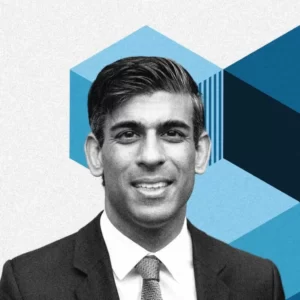
Rishi Sunak to become UK’s first British Asian prime minister

“The United Kingdom is a great country but we face a profound economic crisis.
That’s why I am standing to be Leader of the Conservative Party and your next Prime Minister.
I want to fix our economy, unite our Party and deliver for our country”.


Rishi is a British politician who has been Leader of the Conservative Party since 24 October 2022. He was Chancellor of the Exchequer from 2020 to 2022 and Chief Secretary to the Treasury from 2019 to 2020.He has been the Member of Parliament (MP) for Richmond (Yorks) since 2015.
Sunak was born in Southampton to parents of Punjabi Indian descent who migrated to Britain from East Africa in the 1960s.He was educated at Winchester College, read philosophy, politics and economics (PPE) at Lincoln College, Oxford, and gained an MBA from Stanford University in California as a Fulbright Scholar.
Sunak was elected to the House of Commons for Richmond in North Yorkshire at the 2015 general election, succeeding William Hague. Sunak supported Brexit in the 2016 referendum on EU membership. He was appointed to Theresa May’s second government as Parliamentary Under-Secretary of State for Local Government in the 2018 reshuffle. He voted three times in favour of May’s Brexit withdrawal agreement.
After May resigned, Sunak supported Boris Johnson’s campaign to become Conservative leader. After Johnson was elected and appointed Prime Minister, he appointed Sunak as Chief Secretary to the Treasury. Sunak replaced Sajid Javid as Chancellor of the Exchequer after his resignation in the February 2020 cabinet reshuffle.
As Chancellor, Sunak was prominent in the government’s financial response to the COVID-19 pandemic and its economic impact, including the Coronavirus Job Retention and Eat Out to Help Out schemes. He resigned as chancellor on 5 July 2022, citing his economic policy differences with Johnson in his resignation letter. Sunak’s resignation, along with the resignation of Javid as Health Secretary, led to Johnson’s resignation amid a government crisis.
In July 2022, he stood in the Conservative party leadership election to replace Johnson,and lost the members’ vote to Liz Truss.Following Truss’s resignation amid a government crisis, Sunak won the October 2022 Conservative Party leadership election.

Media Oligarchy and Shaping NEWS

Concentrated media power has been a major (in some ways dominant) force behind the subversion of democratic politics in the United States, a force driven by commercialized images and narratives, celebrity and sports spectacles, profit-making, and mostly conservative opinion—all resulting in a narrowing of the public sphere.
Media capacity to shape popular consciousness—or forge ideological hegemony—turns on both structure and content of communications transmitted across the terrain. In advanced state-capitalist society, and especially the United States, media culture appears as the dominant and in many ways all-consuming mode of communication.
Here we refer to more than just information since the media reproduces images, stories, myths, and spectacles that, in diverse ways, help sustain existing institutions, practices, and values. In this complex modality, corporate media forms a uniquely thriving propaganda system, reaching into every corner of society with high levels of technological sophistication, material resources, and ideological legitimation.

Understanding media oligarchy
To understand contemporary Indonesia one must understand how media oligarchy works here. Media oligarchy shapes the news the public consume every day. News have become increasingly biased and partisans. The most obvious examples are news coverage on the presidential election in 2014. Media were between the two rival camps.
Recent trends have involved oligopolistic ownership, deregulation, expansion of advertising, and rightward shift in political content. Expanded corporate control—over film, TV, cable, radio, print journalism, the Internet—has meant a steady decline of citizenship coinciding with the spread of political alienation discussed elsewhere in this book.
As media culture becomes more integral to all realms of American public life, its effects have been profoundly depoliticizing and thus undemocratic.
A vibrant, democratized communications system would of course impose relatively few limits to political discourse, especially on issues (finance, jobs, the environmental threats, warfare) of urgent importance to public welfare. Media culture largely defines how crucial issues are framed, valorized, and contextualized, what is emphasized, what is trivialized, and what is ignored or dismissed altogether. It establishes the range of views permitted and who is allowed to express those views. While media and popular culture appear open and diversified, in fact those who manage this trillion-dollar empire devote abundant time and resources to governing the flow of information.
However, the decline in trust in mainstream media has not been followed by growth of credible alternative media. Consequently, most people fall victim to hoaxes. Hoaxes and fake news become easily viral because people tend to seek information that would affirm their own beliefs. Some groups see this as an opportunity to gain money from producing fake news.
To make it worse, the internet and social media have also empowered media oligarchs. Media owners are more aggressive in buying competitors to expand their media business, integrating with other businesses, and investing in digital media and communication infrastructure.
Some media owners also enter the political arena by forming parties and placing their cadres in governmental positions. Similar to the political realm, media companies increasingly look like a dynasty: slowly inherited to family members.

Indira Priyadarshini Nawagamuwa

100 years to BBC (BBC) ………. We, who served you as journalists, are helpless today!

By Kanthale, R. G. Dharmadasa

One day, about twenty-three years ago, a good message was given to me, by one of my friends Ms. Vishaka Jayasekara to me, who served as a Trincomalee correspondent to  Lankadepa.

“Comrade! The BBC is looking for a reporter for the Trincomalee district. Brother Elmo told me this story to me. They are looking for someone who is involved in reporting in the midst of difficulties.  I told him about you. What do you think to say to them?”

I did not want to say “good at once” to Vishaka’s proposal. Because she was already giving news to the BBC.

What is your idea, sister? I asked her.

Her reply was that both of us should work together. I agreed to the proposal. That is how I got involved with the BBC. However, was getting news for BBC only from me. Even today, I humbly say that I joined BBC because of that sister Vishaka. I do not know where she is now.

I decided to make up my mind to say goodbye to the ‘ Lakbima’ newspaper, which I loved dearly, due to joining the BBC. It is more difficult to provide news to the BBC, an international media institution, than writing to a Sri Lankan newspaper. I understood that while working with BBC.

Reporting war, especially from a battlefield, is not an easy task. The situation became more dangerous in the background of allegations that the BBC was a media institution engaged in propaganda in favor of the Tigers. We had to be careful of all armed gangs and forces.

Somehow, we faced challenges and revealed the truth to the whole world. Not only war reporting but also various interesting features were among our topics.

Our media colleagues were Dinasena Ratugamage from Vavuniya, Wasantha Chandrapala from Ampara, Taxila Dilrukshi Jayasena from Polonnaruwa, Shanti Selvadore from Batticaloa, Ajith Shantalal Udaya from Ratnapura, KS Udayakumara from Colombo, Prashad Purnamal Jayamaha from Halawatha, Gnanasiri Kottigoda from Colombo. Meanwhile, BBC Tamil Ose journalists were also our close friends. It is difficult to remember their names. Sorry. Later Colombo BBC reporter Azam Amin also joined us. Mr. Elmo Fernando was the pilot of all of us. There is almost no memory without him.

Mr. Priyat Liyanage, whom we all love, was the head of the BBC Sinhala section broadcast from London. Talented journalists such as Chandana Keerthi Bandara, Upali Gajanayake, Vimalasena Hevage, Indira Ramanayake, MJR David, and several others belonged to Mr. Priyat’s staff. At that time, twenty-one lakh people worldwide listened to the BBC Sinhala service.

The BBC World Service celebrated its recent hundred centenary. So many good things happened to hear. However, there is not a single word was heard about Priyath Liyanage and Elmo Fernando, who gave life to the BBC Sinhala Service. Of course, there was no shortage of some prideful people’s stories without them.

So what about poor journalists like us in Sri Lanka? We do not like to speak out about braggarts.

I would like to talk about only the injustice done to the reporters of the BBC World Service in Sri Lanka in the past.

BBC World Service is undisputedly one of the number one media institutions in terms of popularity and recognition with a large number of subscribers whole over the world. Great Britten hosts it. The amount of resources spent on training journalists associated with their institution is also unlimited.

The same training was given to the journalists who work in Sri Lanka with BBC.

BBC issued a special identity card and the Information Department of Sri Lanka issued another identity card to foreign journalists. Meanwhile, we received an agreement that was renewed every year. We do not know whether the British government knows about these or not. But we know one thing. In other words, we know that the British government does not know that the journalists of Sri Lanka who risked their lives for twenty or twenty-five years and worked for the BBC have been removed without giving a cent.

During the Second World War, Sri Lanka was under the British Empire. There, Britain recruited tens of thousands of Sri Lankans to serve in their Royal Army. Immediately end of the war, they were all retired with a full pension until death.

We believe that the British government still does not know that a group of Sri Lankan journalists served one of the popular media institutions BBC in their country.

I declare with the utmost responsibility that Sangeet Kalubowila, who became the head of the BBC Sinhala Division after Mr. Priyath, did this to us. Our problems were not important and important to him was his cruel administration.

Finally, we are happy, about the centenary of the BBC World Service.  In addition, those who gave services to you as journalists are living a miserable fate and would like to tell the BBC administration.

The sad story of R. G. Dharmadasa!

For further details of FMETU..

Journalists Organizations adopt new approaches for Professional Growth in Digital Era

Press Release

Colombo
16 October 2022

Journalists Organizations adopt new approaches for Professional Growth in Digital Era

A series of programs were successfully concluded recently to enhance the professionalism of the media industry in Sri Lanka and focus attention on the professional rights of journalists in Sri Lanka. This was carried out by the Federation of Media Employees Trade Unions, FMETU, with the guidance and support of the International Federation of Journalists, IFJ, through the IFJ Union to Union project, 2022.

The key objective of this programme was to empower young journalists to understand their professional rights and responsibilities and function effectively in the digital era. The FMETU supported young journalists from all the provinces in Sri Lanka to identify the challenges that they are faced with in practicing their profession, especially in relation to organizing themselves as a collective body through unionism. The journalists were guided to look at practical and creative ways to overcome these challenges.

FMETU maintains that in the context of the digital era, media organizations are obliged to equip young journalists with modern skills to enter the media industry, experience professional growth, and retain them in the digital era.
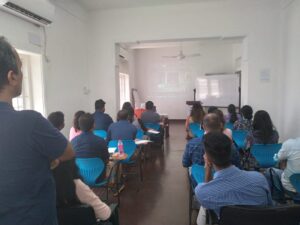
In this context, FMETU carried out discussions with 200 Journalists Island –wide. The discussions centered on their rights and how they can obtain their rights through the collective efforts of media trade unions. These discussions were carried out in the Sinhala and Tamil languages. 140 journalists participated in the Sinhala medium and 60 participated in the Tamil medium discussions.

The second stage of this program featured a survey on the professional status of 340 journalists from all provinces who are members of the FMETU. A distinctive aspect of this survey was the focus on the professional rights that the members are currently entitled to in their respective media institutions.
This survey revealed that many of the journalists, especially provincial correspondents who form the backbone of the media industry and send news from the ground, do not enjoy basic labor rights and work under severe hardships with meager pay and few resources to carry out their journalistic duties.

The findings of this survey are available online on the FMETU website, fmetu.org on the page, IFJ-UTU 2022.

The third phase of the project was training in mobile journalism to a representative group of 20 young journalists. Applications were called for this training and 21 journalists were selected. 30% of the participants were Tamils and Muslims and 30% were women journalists. They participated in a hand on skills development workshop in Colombo, conducted by Dr. Sameera Thialakawardena, Digital Media Specialist and Senior Lecturer, at Open University of Sri Lanka.
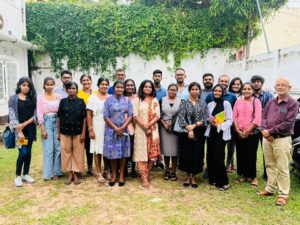
Following the training, the participants produced 17 videos highlighting issues relating to professionalism and the rights of journalists in Sri Lanka. These videos are now uploaded to the FMETU youtube channel, which is linked to the FMETU website.

A detailed report based on the findings of the survey capturing the professional status and rights of journalists in Sri Lanka has been compiled. FMETU will be presenting this report to the Minister of Labour, Minister of Mass Media,  And relevant Government officials.

The FMETU expresses its gratitude to IFJ Asia, Director Ms. Jane Worthington, and IFJ colleagues for their invaluable guidance and support towards the success of this project.

Yours, Truly

Dharmasiri Lankapeli                                                                           Krisni Ifham General Secretary                                                                                President           077 364 1111                                                                                   077 798 6818

Stop gender-based violence in the media

Violence and harassment against women journalists can occur everywhere: in newsrooms, in relation to their sources, at home, on the way home, online. Violence and harassment have devastating implications for the targeted journalist as her well-being, her work, her private life and eventually press freedom are affected.

To mark 25 November, The International day for the elimination of violence against women and girls, the IFJ is calling on all its unions to campaign for the full ratification by their government of ILO Convention 190. Read the testimonies of IFJ Gender Council members in Canada, Cyprus, Greece, Peru and Portugal on why ratification of the Convention is key for women journalists.
he International Labour Organization (ILO) passed on 10 June 2019 a new Convention – ILO C190 to end violence and harassment in the world of work, as well as a recommendation, 206.

We need this convention and its recommendation to be ratified by governments across the world.
Why? Because it can save journalists’ and citizens’ lives by outlawing harassment and violence in the world of work and turn workplaces into violence-free zones.

Journalism can be a dangerous profession. In order to cover breaking stories, journalists put themselves in contexts of war, conflict and natural disasters. In order to report on corruption, human rights abuses and political chicanery, journalists often incur the wrath of the most powerful in society.

Women journalists who find themselves in such situations are often the specific focus of violence. According to IFJ statistics, almost 65% of women media workers have experienced intimidation, threats or abuse in relation to their work. This is a threat to freedom of expression and media freedom.
Abuse can come from all directions: a senior-editor who uses his position to intimidate a young female journalist; a female reporter reporting outside being groped or receiving sexist comments or being physically assaulted by her interviewee or bystanders.

ILO C190 can bring about change. It changes female journalists’ lives by outlawing violence in the world of work and making it a health and safety issue media employers have to respond to.

Today, ask your government to ratify the convention and make a change in your newsroom.

Five things to know about ILO Convention 190 on harassment and violence in the world of work

  • Once it’s ratified by your government it becomes legally binding
  •  It protects all media workers irrespective of their status (freelance, interns, part-time)
  •  It makes violence and harassment a health and safety issue. Media employers will need to include violence and harassment when managing occupational health and safety issues.
  •  It covers gender-based violence, including: sexual harassment, bullying,
    stalking, online harassment and all other forms of violence.
  •  It includes domestic violence because it can have a big impact on your mental health and performance at work.

Here’s what your union can do NOW:

Inform your members about violence and harassment in the workplace.
Include language on ending violence and harassment at work in collective bargaining agreements, using C190 and its recommendation R206 as a basis.
Work with media to make sure that health and safety policies include violence and harassment, and more specifically gender-based violence.

For more information, please contact IFJ on +32 2 235 22 16

The IFJ represents more than 600,000 journalists in 146 countries

UN: IFJ leads call for action to fight impunity

Launching of the campaign for a UN Convention on the Safety and Independence of Journalists and Other Media Professionals at the 51st session of the UN Human Rights Council in Geneva. Credit: Dina Abu Saab.

Geneva, October 4, 2022 – The campaign for a new binding international instrument dedicated to the safety of journalists has been formally launched at the 51st session of the UN Human Rights Council in Geneva. The call for a new UN Convention to enhance the safety, protection and independence of media workers has been backed by journalists and media unions, associations, media representative bodies and NGOs across the world.

Repeal the anti-human, oppressive “Official Secrets Act” immediately!

Press release

September 29, 2022


Repeal the anti-human, oppressive “Official Secrets Act” immediately!

The government has issued a gazette notification naming a large area in Colombo city, government buildings, and jurisdictions as high-security zones. The Sri Lanka government was seriously accused of publishing this gazette by abusing the “Official Secrets Act”, which has not been used by any government in the recent past.

The gazette issued on September 23 said that the written permission of the police was to be obtained six hours in advance to hold any people’s march or public assembly within the designated “High-Security Zones”.

The police department has broad powers to arrest anyone who entered these zones, and those arrested can granted bail by only High Courts.  It is clear that the government is taking steps to use illegal force against people who stand up for peaceful assembly and freedom of expression with these severe restrictions.

World human rights organizations and many other organizations are forcing the government to withdraw these new regulations have been imposed as illegal restrictions on freedom of speech and freedom of expression.

The Sri Lanka Bar Association has made a statement and said that the government is trying significantly curtailing the freedom of the citizens without any reasonable or legal basis. The Sri Lanka Human Rights Commission says that the basic rights of the people of the country are severely violate by this Act. It has been further suggested to the government withdraw this outdated law.

The Federation of Media Employees Trade Unions (FMETU), which joins hands with the world’s largest media organization, the International Federation of Journalists (IFJ), strongly urges the Sri Lankan government to withdraw this anti-human law immediately.

Yours Faithfully

Dhamasiri Lankapeli

General Secretary

077 364  1111

Empower young journalists to function effectively in the digital economy!

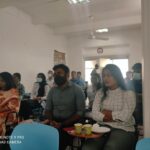
A representative group of 21 young male and female journalists from all districts and communities, spent a full day at an exciting and impactful program on 3rd September 2022.

The program was organised by the FMETU through the IFJ – UTU 2022 project. The purpose was to empower young journalists to function effectively in the digital economy. They were linked to senior journalists and made aware of their professional rights and responsibilities.

The full-day program featured interactive training on mobile journalism. The lead trainer was Dr. Sameera Thilakawardena, Ph.D., an expert in digital media. The participants learned a lot and had a lot of fun as they produced short videos.

The participants are expected to produce videos highlighting issues relating to journalists’ rights and the media industry.

FMETU is very grateful to Dr. Thilakawardena and the Rainbow Institute of Communication for all the support to make this event a resounding success.

More pictures of the program are down here.

Forward Stride in Safeguarding Sri Lankan Journalists’ Rights FMETU-IFJ-UTU 2022 Program

The Federation of Media Employees Trade Unions, FMETU is pleased to announce a major stride forward in its efforts to protect journalists’   rights and enhance professionalism amongst Journalists in Sri Lanka

This is facilitated by FMETU – IFJ (International Federation of Journalists) Union-to-Union program 2022.

The primary objective of the FJ-UTU 2022 program is to strengthen the professional rights of FMETU member journalists and media workers.  In this context, we are collecting information on the professional status of a representative sample of journalists, island-wide and presenting this information through an online database.

The project also facilitates us to empower young journalists by linking them with senior journalists and discussing with them about professional rights and responsibilities of journalists and the role of media trade unions. The young journalists are being empowered further by training them on mobile journalism and supporting them to produce 15 short videos on professional issues.

The IFJ-UTU support program for strengthening regional media organizations is managed annually by the IFJ Asia Pacific office. The main objective of the program is to equip members with the necessary knowledge and skills to play an effective role as a trade union in the new global digital economy. The program is designed to educate journalists and media workers in order to lobby and stand up for the basic professional rights of journalists.

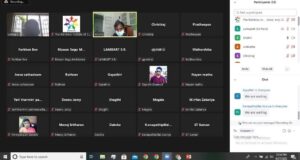
FMETU kicked off the project to empower members with two webinars in the local languages, Sinhala and Tamil languages with the participation of 300 journalists from all over the country.

On September 3, the training on mobile journalism will be conducted through a full-day workshop. The lead resource person is Dr. Sameera Thilakawardena, Ph.D., a Communications expert, specializing in digital media and cinema.

After the training, 15 investigative videos on professional issues and challenges faced by journalists and media workers will be produced and shared through the fmetu.org website.

At the conclusion of the program, an analytical report on the professional issues and challenges of journalists will be released on the internet through fmetu.org. The Federation of Media Employees Trade Union also intends to present this report to the relevant Government authorities and lobby for critical changes.

The Secretary of the Federation of Media Employees Trade Unions told fmetu.org that the primary objective of this program is to establish a group of professional journalists who are entitled to social security and other rights enjoyed by employees in Sri Lanka.


FMETU invites   journalists who are interested in joining the campaign to register their support by logging on to the link https://tinyurl.com/FMETU-PROFILE before 5 September 2022


Do you have questions? Call or visit us.

+(94) 773 641 111

#30, Amarasekara Mawatha, Colombo 5, Sri Lanka.

info@fmetu.org

Newsletter

Get latest news & update

© 2021 – FMETU. All rights reserved.

Carefully crafted by Ceyber Ceylon